
How to Maintain Timber Windows and Doors
Simple maintenance practices that help protect the natural beauty, performance and longevity of timber windows and doors.

09 October 2026
Timber windows and doors can bring warmth, character and craftsmanship to a home that is difficult to replicate with other materials.
But like any natural material, timber benefits from regular care.
Good maintenance doesn’t have to mean complicated or time-consuming work. In many cases, keeping timber joinery in good condition comes down to regular inspection, keeping surfaces protected, addressing small problems early and understanding how the windows and doors respond to their environment.
For Australian homes, where timber joinery can be exposed to strong sunlight, changing temperatures, rain and humidity, a consistent maintenance routine can make a significant difference.
Here are some practical ways to keep timber windows and doors looking and performing at their best.
1. Inspect Your Timber Joinery Regularly
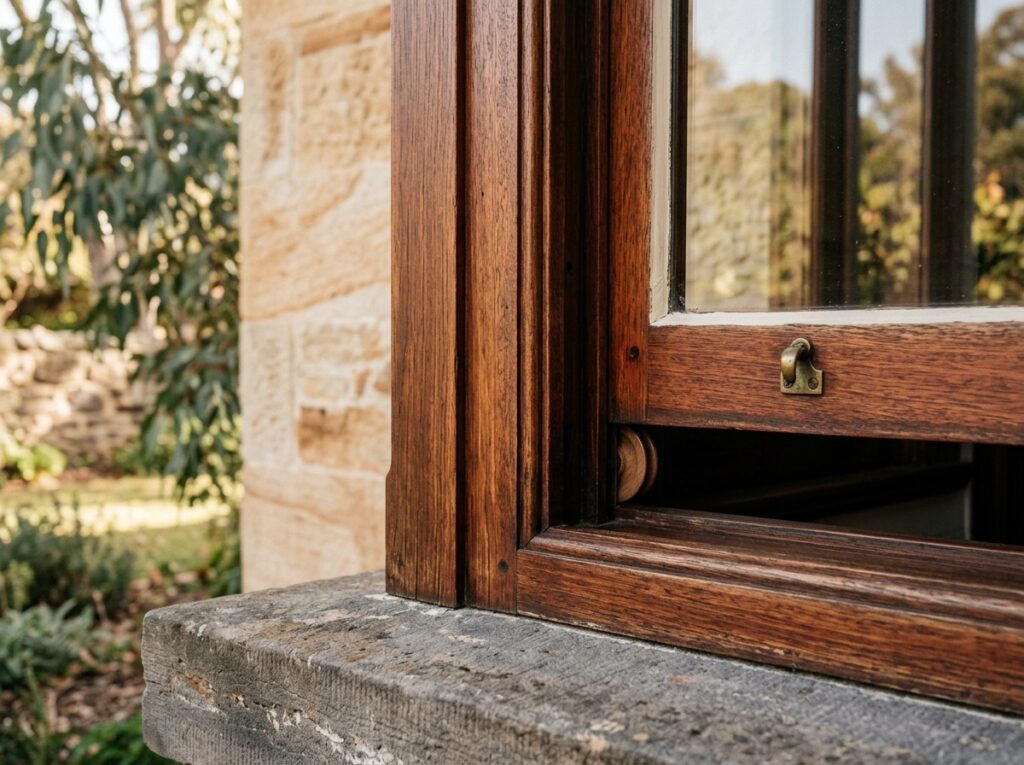
The best maintenance often starts with simply looking closely.
Take time to inspect your windows and doors for early signs of deterioration, particularly around exposed areas such as sills, lower sections of frames, corners and joints.
Look for:
- Cracking or deteriorating finishes
- Peeling or flaking paint
- Discolouration
- Soft or damaged timber
- Gaps around joints
- Signs of moisture
- Damaged seals
- Loose or deteriorating hardware
Catching these issues early can make repairs considerably more straightforward.
A small area of deteriorating finish is much easier to address than timber that has been left exposed to moisture and weather for an extended period.
2. Keep Timber Surfaces Clean
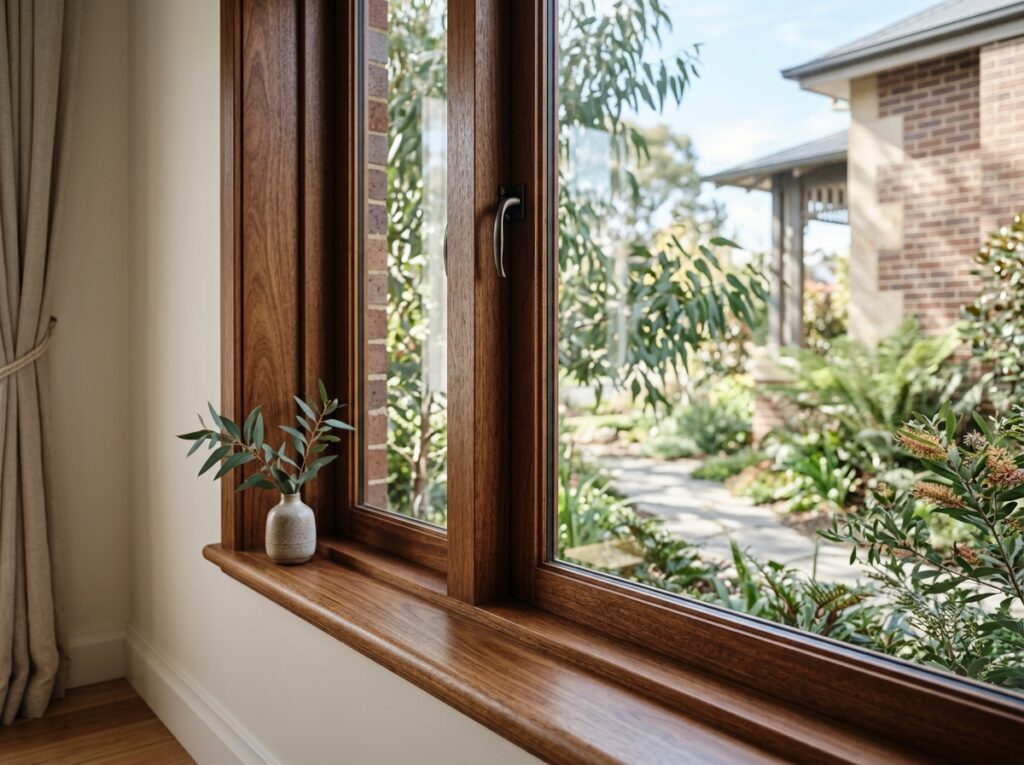
Dirt, dust, salt and other environmental deposits can accumulate on timber frames over time.
Regular gentle cleaning helps keep the surface looking its best and makes it easier to identify any changes in the timber or protective finish.
A soft cloth or suitable gentle cleaning method is generally preferable to aggressive products or abrasive materials that could damage the finish.
Pay particular attention to corners, sills, drainage areas and other locations where dirt and moisture can collect.
The objective isn’t simply cosmetic.
A clean surface makes it easier to monitor the condition of the timber and its protective coating.
3. Protect the Finish
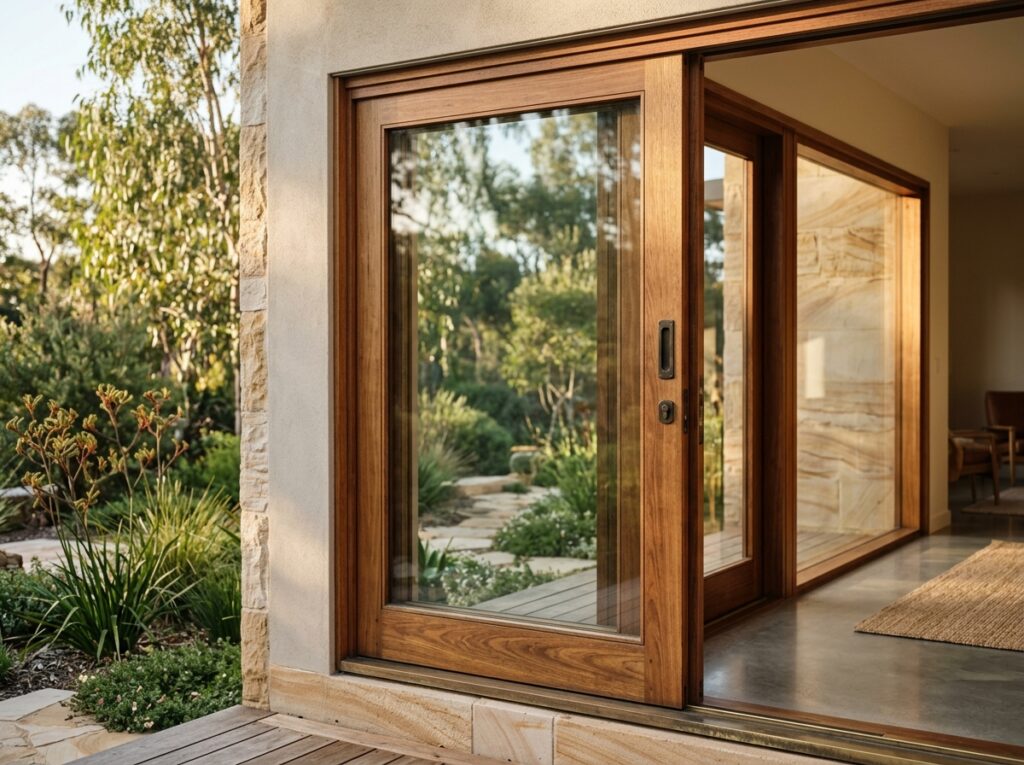
A good finish provides an important layer of protection between the timber and the environment.
Depending on the type of finish used, timber windows and doors may require periodic recoating or refinishing to maintain that protection.
Sun exposure can gradually affect coatings, while weather and moisture can also contribute to deterioration.
Rather than waiting until the finish has completely failed, keep an eye on its condition and follow the coating manufacturer’s recommendations for maintenance.
The exact maintenance interval can vary depending on the timber, finish, orientation and level of exposure.
Regular upkeep is generally easier than restoring a finish after significant deterioration has occurred.
4. Pay Extra Attention to Exposed Areas
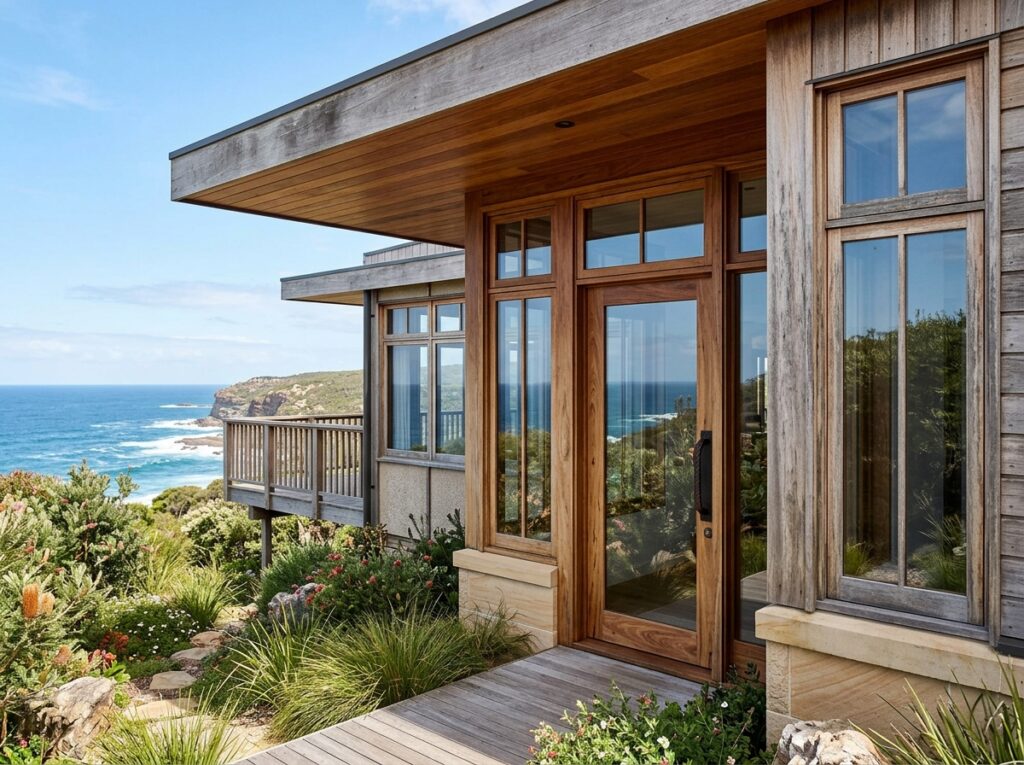
Not every part of a window or door experiences the same conditions.
South-facing, north-facing, coastal and highly exposed openings can experience very different levels of sunlight, wind, rain and moisture.
External sills and lower sections of timber doors can be particularly important areas to monitor because they may be exposed to water and environmental debris.
If a window or door is located in a particularly exposed position, its maintenance requirements may be greater than joinery that is sheltered by a roof, veranda or deep architectural overhang.
Understanding the conditions around each opening helps homeowners prioritise maintenance where it is needed most.
5. Check Seals, Glazing and Weather Protection
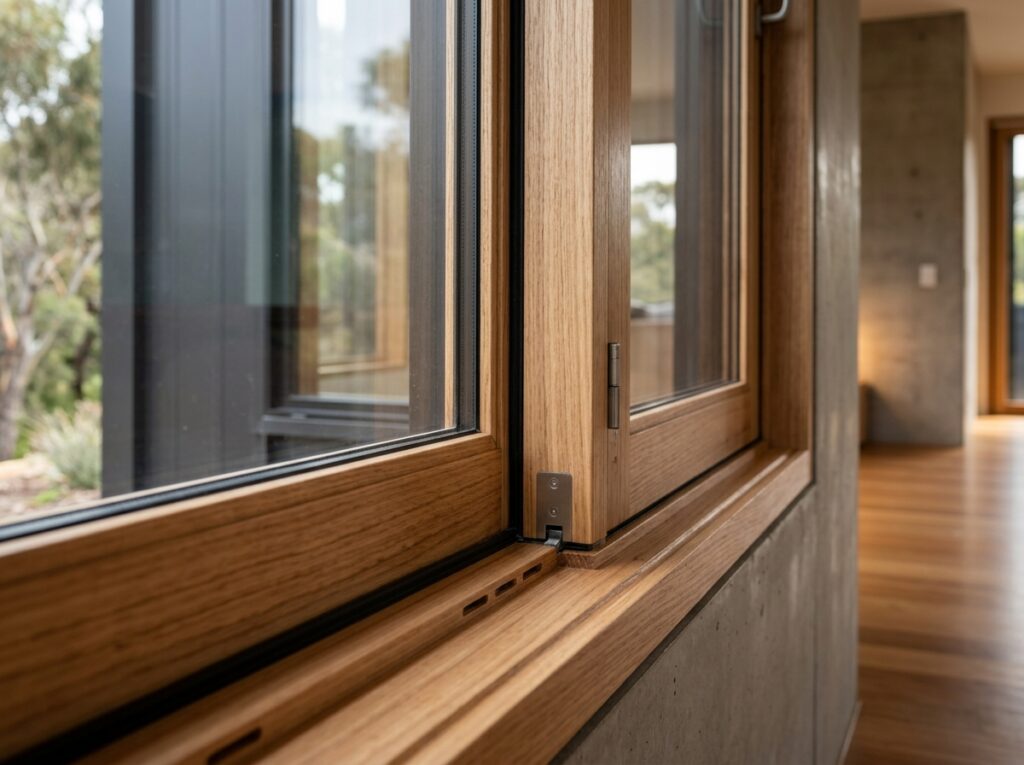
Timber maintenance isn’t only about the timber itself.
The surrounding components also deserve attention.
Check window and door seals for signs of deterioration and make sure drainage paths remain clear. Look for damaged glazing, gaps or areas where water may be entering around the opening.
Weather sealing plays an important role in helping a window or door perform as intended.
If you notice draughts, water ingress, condensation or changes in operation, don’t ignore them.
These can sometimes indicate an issue that needs further investigation.
6. Keep Hardware Operating Smoothly
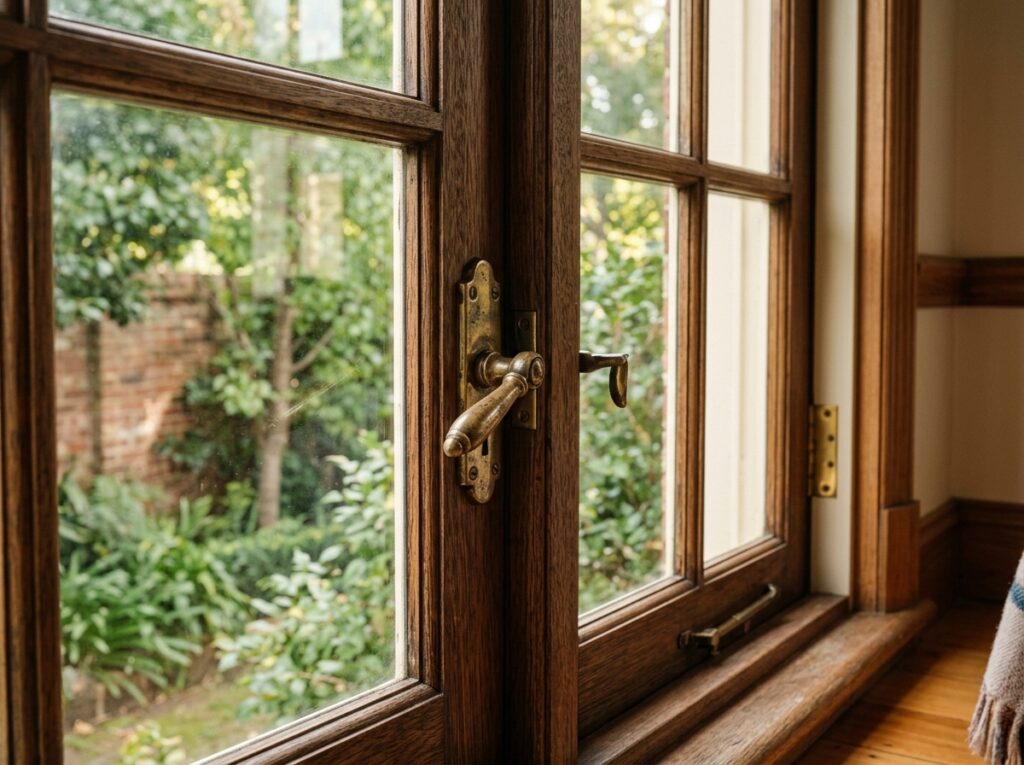
Handles, hinges, locks and other hardware are working components, so they also require attention.
If a timber window or door becomes increasingly difficult to open or close, don’t simply force it.
Changes in operation can sometimes be associated with hardware, alignment, movement in the timber or other issues that should be investigated.
Keeping hardware clean and appropriately maintained can help preserve smooth operation.
For older timber windows and doors, maintaining original hardware can also be an important part of preserving their character.
7. Keep Water Away From Where It Shouldn't Be

Moisture is one of the most important things to manage when maintaining timber.
This doesn’t mean timber windows and doors need to be kept completely dry — they are designed to perform in real environments.
The important consideration is ensuring that water can drain away properly and that protective finishes, seals and weather details remain effective.
Keep drainage channels and surrounding areas clear of leaves, dirt and debris.
Pay attention to recurring moisture around sills and thresholds.
If water is consistently collecting where it shouldn’t, investigate the cause rather than simply treating the visible symptom.
8. Address Small Problems Early
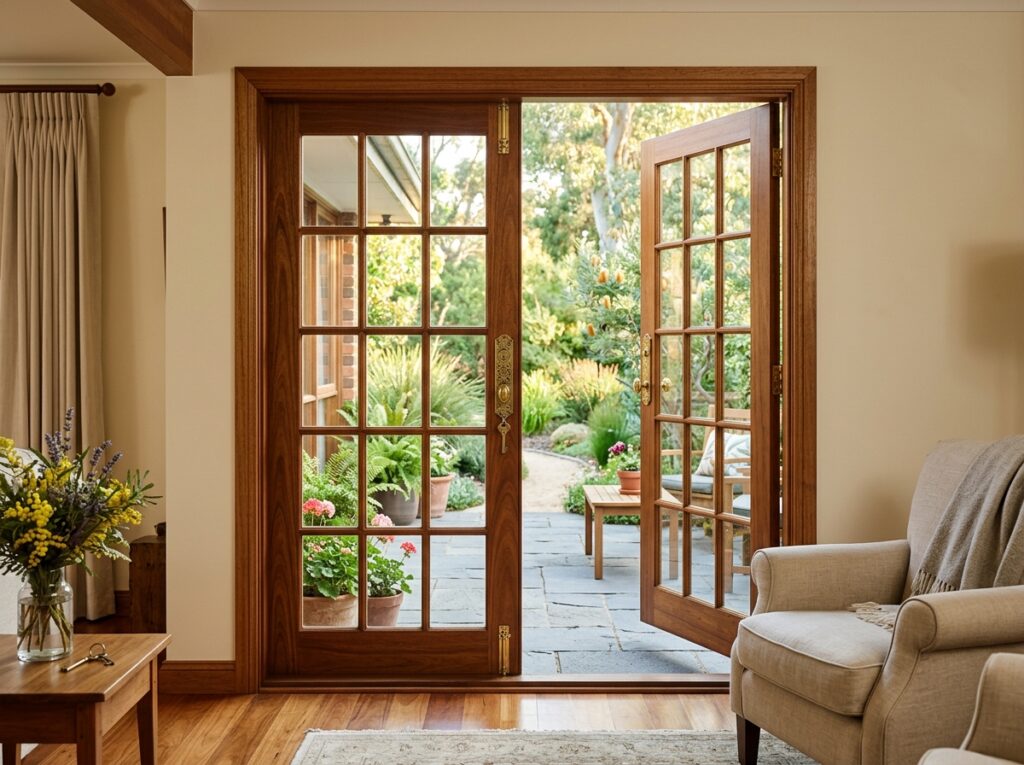
One of the simplest maintenance principles is also one of the most valuable:
Don’t wait for a small problem to become a major one.
A deteriorating coating can eventually expose the timber.
A small seal failure can allow unwanted moisture or air movement.
A stiff hinge or latch can become a larger hardware or alignment issue if it is continually forced.
Regular inspections allow homeowners to identify these changes while they are still manageable.
For timber joinery, preventative maintenance is often about protecting the material before deterioration becomes extensive.
A Maintenance Routine That Protects Your Investment
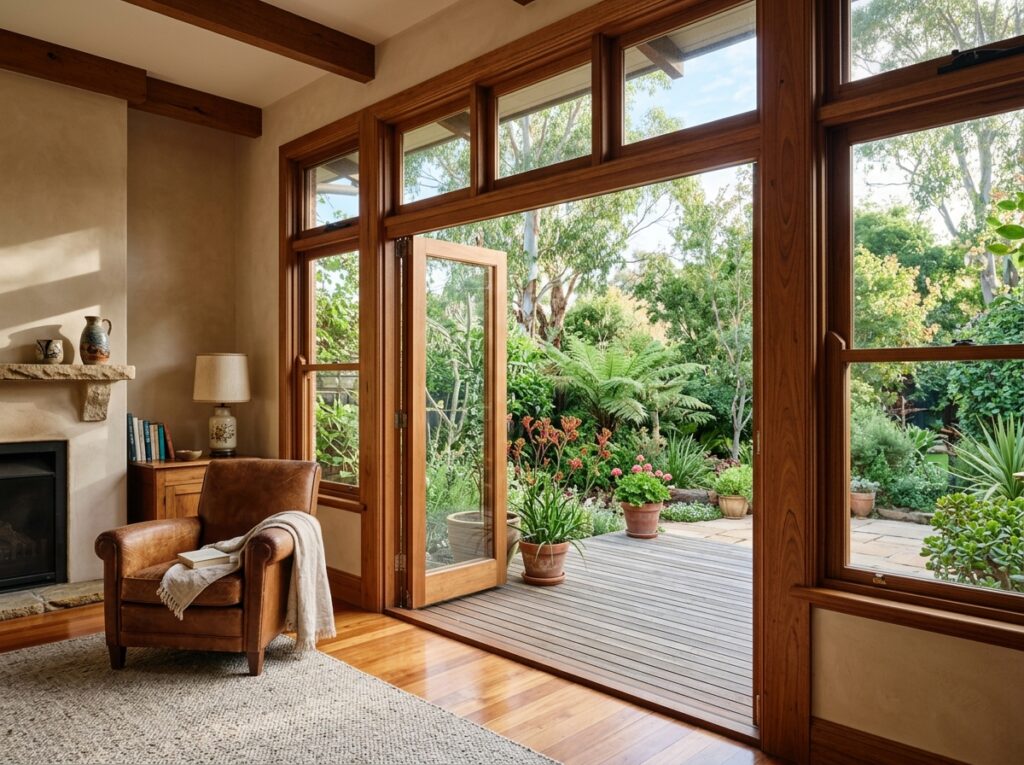
Imagine a homeowner with a set of custom timber windows that have been part of the home for many years.
Instead of waiting until the frames show obvious deterioration, they inspect the joinery periodically, clean the surfaces, monitor the protective finish and check hardware and seals.
When they notice a small area beginning to deteriorate, they address it early.
Over time, these small actions help protect the timber and maintain the appearance and function of the windows.
This is one of the advantages of looking at maintenance as an ongoing routine rather than a major project that only happens when something goes wrong.
Timber rewards attention.
With the right care, well-made timber windows and doors can continue to contribute warmth, character and functionality to a home for many years.
Looking After Timber for the Long Term
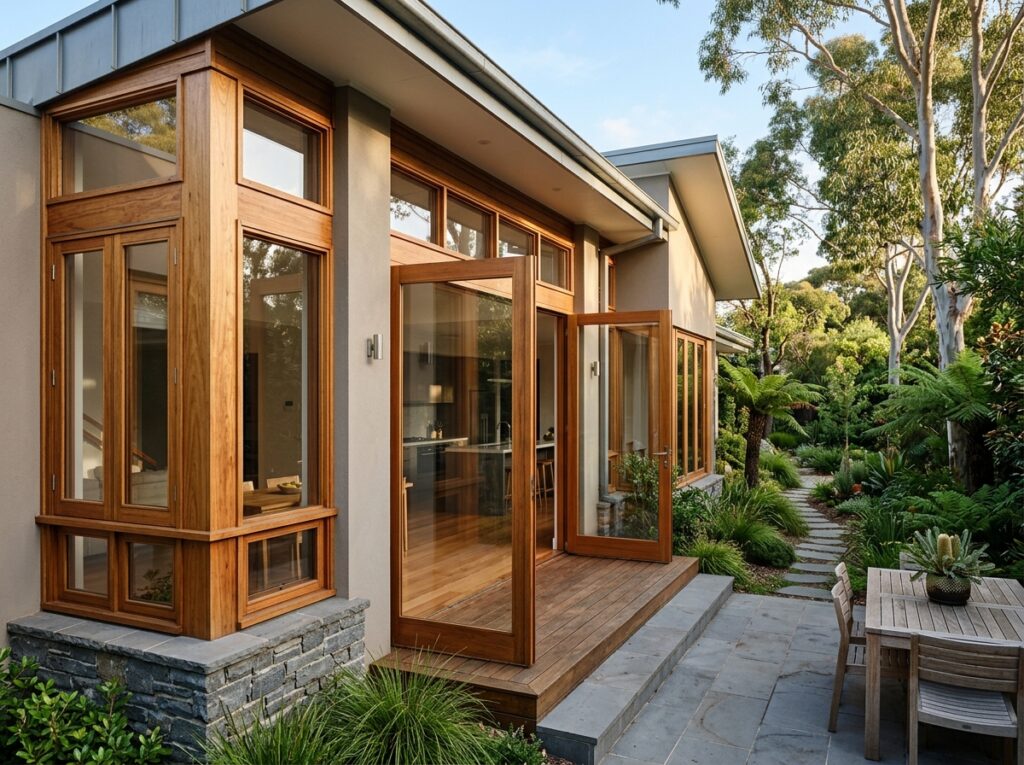
Timber windows and doors are a long-term investment in the character and functionality of a home.
Their natural grain, warmth and ability to complement both heritage and contemporary architecture are part of what makes timber so enduring.
But that longevity depends on more than how the windows and doors are made.
It also depends on how they are looked after.
Regular inspection, appropriate cleaning, maintaining protective finishes, checking hardware and seals, and responding to problems early can all help keep timber joinery performing at its best.
At Kilburn Joinery, we believe well-crafted timber deserves to be looked after properly.
Good maintenance doesn’t just protect the timber — it helps preserve the craftsmanship behind it.